The problem
For energy consumers with smart meters, switching suppliers could mean their meter losing functionality.
People would need to revert to manual readings, and those with pre-payment meters wouldn’t be able to top-up online anymore. This particularly affected vulnerable customers, like those on lower incomes.
The timeline
August to December 2019.
The team
- 1 User Researcher
- 1 Content Designer
- 1 Delivery Manager
- 1 UX Designer (me)
The process
Discovery
To quickly understand this specific problem, the users affected, and to generate solutions, I facilitated a Design Sprint.
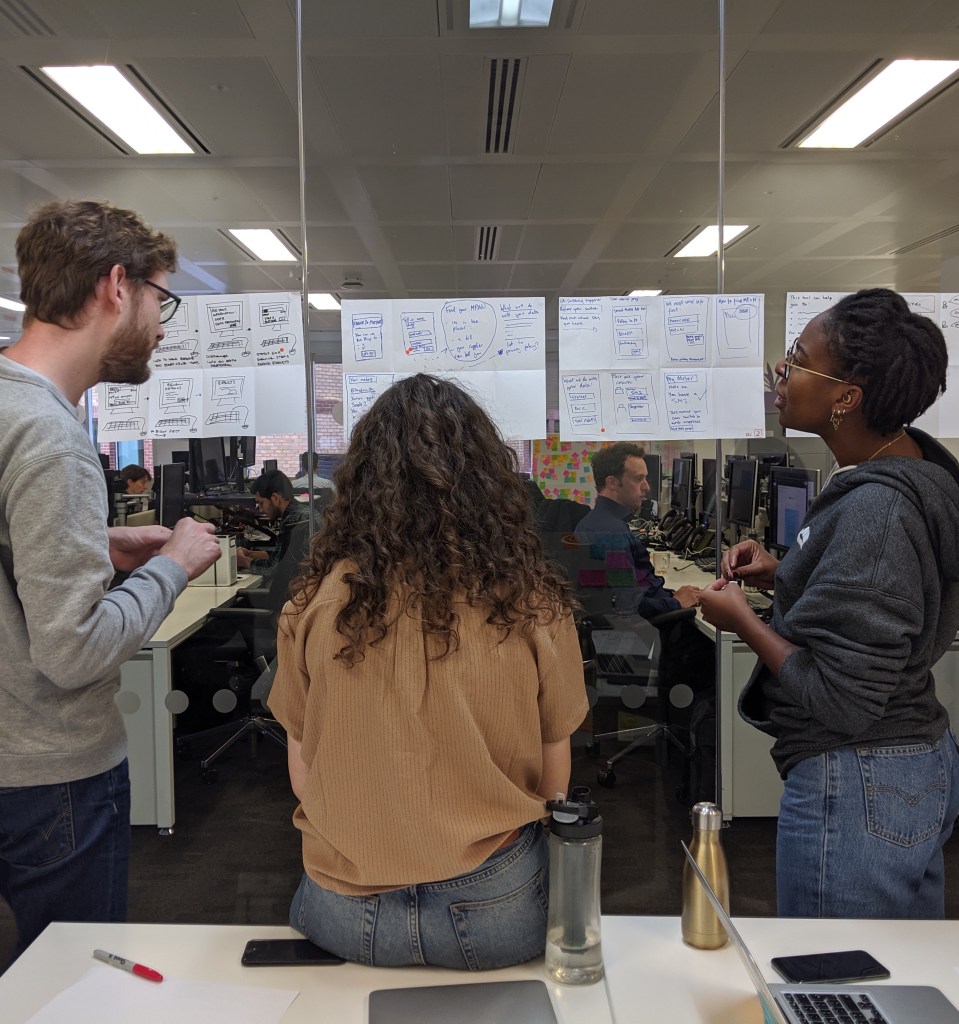
We were able to condense this Design Sprint into three days, instead of the usual five, because we were familiar with the energy industry and already had some understanding of users and stakeholders.
During our Design Sprint, we:
- Made assumptions
- Spoke to experts
- Analysed existing data and research
- Identified pain points and opportunities
- Sketched ideas, using the Crazy 8s method, then dot-voted on them
Design
Using Balsamiq, I created wireframes from our shortlisted ideas. These all involved ways for users to check the compatibility of their meter with other suppliers before switching to them and experiencing issues.
Next I shared these rough ideas with internal stakeholders in order to incorporate their feedback into the prototype.
I also liaised with our internal developers (building the front-end) and the external development team (managing the back-end) to ensure our MVP was technically feasible so that we could continue.
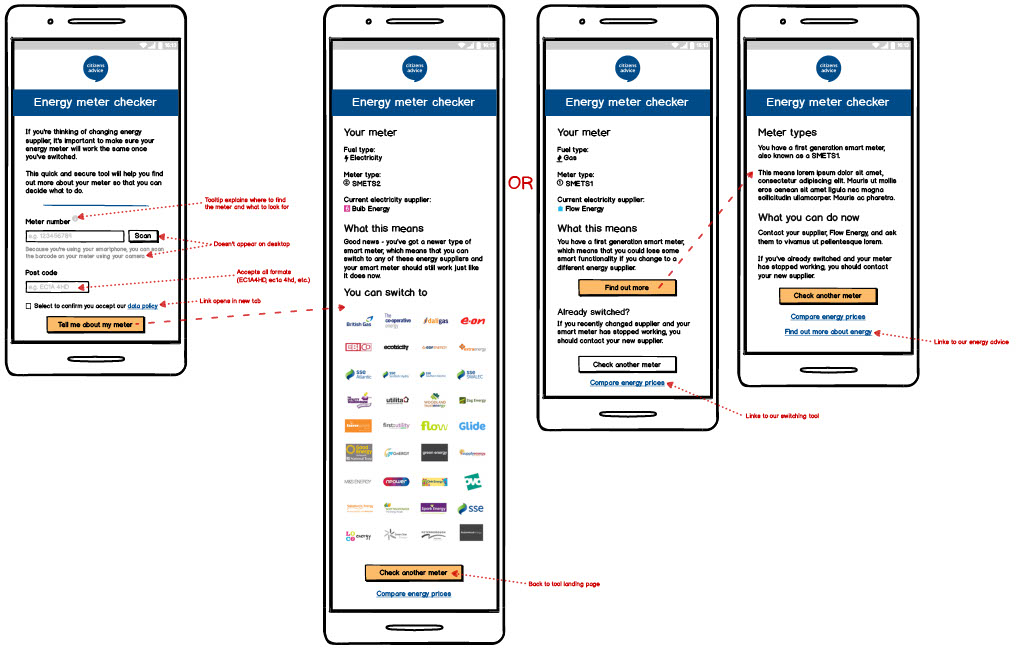
Collaborating with our Content Designer, who wrote all of the copy, I used Axure to rapidly create an interactive prototype that we could test with real people.
Testing
Alongside the User Researcher, I supported a brief round of internal usability testing so that we could iron out any sticking points before testing with actual consumers.
Once we were confident in our prototype and research discussion guide, we went to Liverpool Street train station to conduct research with real people. We focussed on guerrilla testing and chose this location because we felt it’d give us a fairly representative view of society, resulting in diverse and robust feedback.
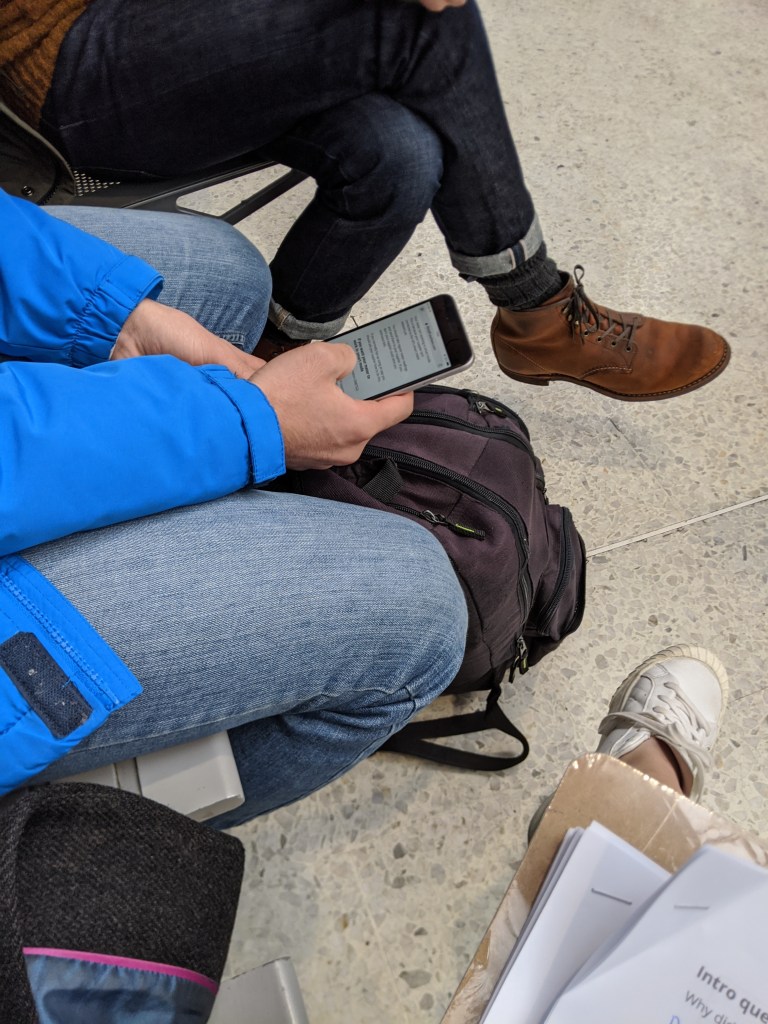
This was invaluable in bettering our understanding of how people might use the tool, what their expectations were, and what they might do in various scenarios.
Delivery
Using these insights, we refined both the copy and the prototype before sharing with stakeholders for sign-off.
We then wrote Jira tickets, containing clear user stories, for the developers.
Planned next steps included using multi-variate tests, analytics, heatmaps, and surveys to gather more user feedback and continue improving the design. We were also considering the value of additional features such as a barcode or QR code scanner, so that users with limited eyesight or mobility could more easily submit their meter numbers by scanning the meter directly, using their phone’s camera. At this point I moved on from Citizens Advice to become Lead UX Designer at the Barbican Centre.
Summary
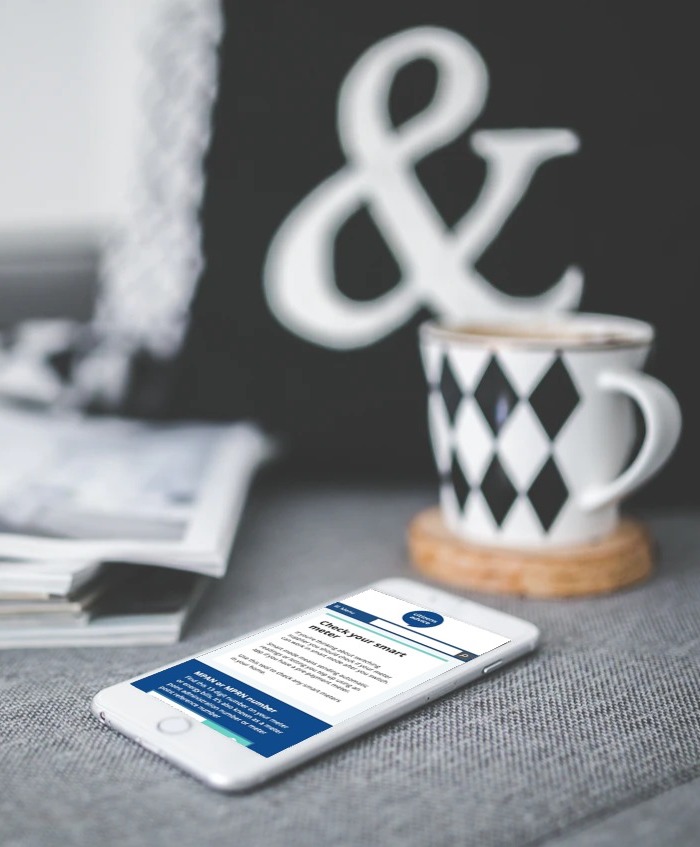
I’m proud of this project as an example of how well our small team worked together, involving the right additional people at the right times, to design a tool that would enable energy consumers to make an informed choice before switching suppliers.
As I understand it, this tool never went live due to complexities between all of the different agencies involved.
What else have I done?
See more of my work, including launching a streaming service at the Barbican Centre and testing internal tools at Cancer Research UK.
 Becky Colley, UX Designer